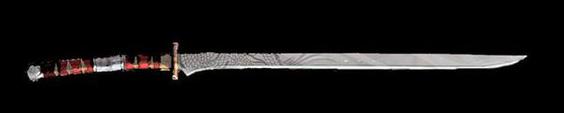
KEATING / Knives / Overview
James A. Keating is a controversial but influential figure in the modern tactical knife and self-defense world. He’s best known for popularizing practical knife-combat training in the 1990s through his company Combat Technologies (“Comtech”), instructional videos, seminars, and collaborations with knife manufacturers.
A few key points about him:
He trained across multiple martial arts systems over decades, including fencing, JKD (Jeet Kune Do), kali/arnis, aikijujutsu, and other combative arts. He often described his approach as pragmatic rather than “traditional martial arts.”
He became especially known for “edged weapons” instruction — knife tactics, defense against knives, and the historical study of blade combat. His seminars and VHS/DVD series were widely circulated in the tactical/self-defense community during the 1990s and early 2000s.
Keating collaborated with knife companies and designers on tactical knife concepts and self-defense tools. One of his most famous creations is the “Comtech Stinger,” a compact impact tool intended for personal defense.
He was also associated with instructional material involving knives like the Spyderco Civilian and Chinook models, which gained cult followings in knife circles.
Keating’s reputation depends heavily on who you ask:
Supporters view him as one of the early pioneers who brought serious study of knife defense into mainstream Western martial arts and tactical training.
Critics argue that some of his material was theatrical, overly aggressive, or difficult to validate under real-world conditions.
Either way, he had a significant impact on the “tactical knife” boom of the 1990s–2000s. Many instructors and gear makers in that space either trained with him directly or were influenced by his work.
He’s also known for a blunt, anti-traditionalist attitude. In interviews he dismissed rank systems and “dojo politics,” emphasizing functional skill over formal martial arts hierarchy.
James A. Keating developed a very distinctive reputation because he combined several worlds that usually stayed separate in the 1980s and 1990s:
traditional martial arts,
military/police combatives,
historical swordsmanship,
and the emerging “tactical gear” culture.
That combination made him unusually visible during the rise of modern tactical knife culture in the U.S.
Background and Martial Arts Development
Keating reportedly began martial arts training as a child and later explored a broad range of systems, including:
fencing,
aikijujutsu,
savate,
JKD concepts,
Filipino martial arts (kali/eskrima/arnis),
and historical European weapons work.
One of the themes in his teaching was that weapons training changes how you understand movement. He often argued that empty-hand systems became more realistic when studied alongside knives, sticks, or swords.
His public persona was strongly shaped by:
black clothing and tactical presentation,
historical weapons collections,
dramatic demonstrations,
and a very academic style of discussion mixed with combatives.
That style made him memorable long before YouTube-era martial arts personalities existed.
Combat Technologies (“Comtech”)
Keating founded an organization commonly called “Comtech” or Combat Technologies.
Comtech became known for:
seminars around the U.S.,
instructor certifications,
instructional VHS tapes and DVDs,
articles in knife and martial arts magazines,
and practical/self-defense-oriented training.
During the 1990s, VHS instructional tapes were a major way martial arts spread internationally. Keating’s tapes circulated heavily among:
police trainers,
security personnel,
survivalists,
martial artists,
and knife enthusiasts.
His material covered topics like:
reverse-grip knife use,
close-quarters weapon access,
improvised weapons,
stick and cane methods,
firearm retention,
anti-grappling tactics,
and “counter-offensive” knife defense.
He emphasized decisiveness and aggression in self-defense situations, which appealed to some students but also drew criticism from others who felt it encouraged unrealistic or excessively combative thinking.
Influence on Tactical Knife Culture
This is probably where his influence was largest.
In the 1990s, “tactical knives” became a huge niche market. Companies began designing folders specifically marketed for:
self-defense,
law enforcement,
emergency use,
and combatives.
Keating helped shape that culture by consulting on knife designs and explaining how knives might actually be deployed under stress.
Spyderco Connection
He became closely associated with Spyderco and helped popularize several iconic designs.
Spyderco Civilian
The Civilian became famous because it was purpose-built as a defensive knife. Its deeply curved serrated blade was designed more for slashing than utility cutting.
Keating frequently demonstrated its use in seminars and videos, which helped give it an almost mythic reputation among knife enthusiasts.
Spyderco Chinook
The Chinook, designed by James Keating, blended:
Bowie knife influences,
tactical folder design,
and heavy-duty utility construction.
It became one of Spyderco’s better-known large tactical folders.
The Comtech Stinger
One of his most recognized self-defense tools was the:
Comtech Stinger
This was a compact metal impact device intended for close-quarters defense. It was marketed as:
small,
concealable,
fast to deploy,
and legally simpler than carrying a knife in some jurisdictions.
The Stinger became fairly famous in the self-defense world and inspired many later “kubotan-style” tools.
Training Philosophy
Keating’s philosophy had several recurring themes:
1. Weapons-first thinking
He often argued that real violence frequently involves weapons, and therefore martial artists should not train as though empty-hand fighting exists in isolation.
2. Mobility over strength
He emphasized footwork, angling, timing, and positional dominance rather than brute force.
3. Psychological readiness
He discussed fear management, decisiveness, and “combat mindset” extensively.
4. Historical respect
Unlike some purely modern tactical instructors, Keating was fascinated by historical combat systems and antique weapons. He collected and studied swords, daggers, and military artifacts.
Why He Was Polarizing
Keating inspired admiration and skepticism in roughly equal measure.
Supporters appreciated:
his deep historical knowledge,
his broad martial arts background,
his charisma as a teacher,
and his willingness to pressure-test ideas outside rigid traditions.
Critics questioned:
the realism of some demonstrations,
instructor-ranking claims common in martial arts culture,
highly theatrical marketing,
and whether some knife-defense concepts could realistically work under chaotic real-world conditions.
The broader knife-combat field itself is controversial because many experts argue that real knife encounters are chaotic, fast, and extremely dangerous regardless of training.
Historical Importance
Even critics generally acknowledge that Keating helped define an era.
Before the internet and social media:
VHS tapes,
knife magazines,
gun shows,
and traveling seminars
were the main way tactical ideas spread.
Keating became one of the most recognizable personalities in that ecosystem alongside other combatives instructors of the era.
A lot of today’s:
tactical folders,
self-defense knife training,
reverse-grip discussions,
and “martial bladecraft” culture owe at least some indirect influence to the movement he helped popularize.
James A. Keating taught knife use as a movement system rather than a collection of fixed techniques. A few ideas showed up repeatedly in his material:
Reverse Grip (“Pakal”) Emphasis
One thing that made him stand out was how much attention he gave to reverse-grip knife work — blade extending from the bottom of the fist rather than the thumb side.
Today “pakal” is common in tactical knife discussion, but in the late 1980s and early 1990s it was still relatively niche in the West.
He argued reverse grip offered:
stronger retention in grappling range,
powerful ripping/slashing mechanics,
and easier access during entangled close-quarter fights.
Critics argued:
it sacrificed reach,
reduced versatility,
and was overemphasized compared with conventional fencing-style grips.
Modern trainers usually view reverse grip as contextual rather than universally superior.
Angling and Footwork
Keating borrowed heavily from:
fencing,
Filipino martial arts,
and evasive movement systems.
He emphasized:
moving off the line,
attacking from oblique angles,
disrupting balance,
and controlling range.
A recurring idea was:
“Position before technique.”
Meaning:
where you stand,
your timing,
and your line of movement
matter more than memorizing elaborate disarms.
That idea actually aligns fairly well with many modern combat-sports and combatives principles.
Flow Drills and Reflex Development
His training often used:
repetitive partner drills,
progressive resistance,
and “flow” exchanges.
These resembled Filipino martial arts sensitivity drills but adapted for knives and improvised weapons.
Supporters thought this built:
reaction speed,
tactile awareness,
and transitional movement.
Critics argued some drills became too cooperative and didn’t fully simulate chaotic resistance.
That criticism is common across many martial arts systems, not just Keating’s.
The Legend of the Spyderco Civilian
The Civilian became one of the most infamous tactical knives ever made.
Its origin story contributed heavily to the mythology.
Why It Was Created
Spyderco reportedly developed it for undercover law-enforcement personnel who:
might not have extensive knife training,
needed a compact defensive tool,
and were unlikely to use a knife for utility tasks.
The blade shape was highly unusual:
thin,
deeply curved,
aggressively serrated,
almost claw-like.
It was designed primarily for slashing soft tissue rather than stabbing or utility cutting.
Spyderco itself often described it as purpose-built for defense rather than everyday use.
Why It Became Mythic
Several things fed the Civilian’s reputation:
1. Appearance
It looked intimidating and unlike normal pocketknives.
2. Keating’s Demonstrations
Keating’s seminars and VHS tapes showed:
rapid deployment,
flowing slashing combinations,
close-quarters movement,
and dramatic cutting demonstrations.
For many viewers in the pre-YouTube era, this was their first exposure to “modern tactical knife” doctrine.
3. Scarcity and Reputation
The Civilian wasn’t a mainstream utility knife. It became a collector and enthusiast item associated with:
undercover carry,
extreme self-defense,
and specialized combatives.
That gave it a near-cult status.
The Reality of Knife Defense According to Modern Experts
This is where things get sobering.
Modern law-enforcement and combatives trainers often emphasize that:
In a real knife encounter, even the “winner” is likely to be injured.
Contemporary research and force-on-force training have pushed the field toward more realism than some 1990s-era instructional material.
Current Consensus Trends
Many modern instructors stress:
avoidance first,
escape whenever possible,
environmental barriers,
improvised shields,
and firearm access (where lawful and applicable)
over “dueling” with knives.
There’s much more skepticism today toward:
flashy disarms,
elaborate trapping sequences,
and prolonged knife exchanges.
The “21-Foot Rule” Influence
One major concept shaping modern training is the:
Tueller Drill
This demonstrated how quickly an attacker with a knife can close distance before a defender can effectively react with a firearm.
That research heavily influenced:
police training,
concealed carry doctrine,
and modern self-defense thinking.
It reinforced the idea that knife attacks are:
sudden,
explosive,
and difficult to control.
This partly changed how later generations evaluated earlier tactical knife teachings.
The 1990s Tactical Combatives Boom
To understand Keating, you almost have to understand the era.
During the late 1980s and 1990s, several cultural trends collided:
1. Post–Cold War Tactical Culture
There was growing fascination with:
special operations,
SWAT teams,
survivalism,
and military-style gear.
2. The Rise of Tactical Knives
Knife companies exploded with products marketed for:
self-defense,
police,
military,
and “combat.”
Large black-coated folders became symbolic of preparedness culture.
VHS Tape Culture
Before streaming or online courses, martial arts spread through:
mail-order catalogs,
martial arts magazines,
conventions,
and VHS tapes.
Keating was exceptionally effective in this environment because he had:
strong presentation skills,
a memorable visual persona,
and intellectually dense commentary.
People often copied and traded his tapes internationally.
The “Reality-Based Self-Defense” Movement
Keating was part of a larger shift away from:
point sparring,
kata-heavy systems,
and traditional dojo formalism.
The emerging “reality-based” movement emphasized:
adrenal stress,
close-range violence,
asymmetrical attacks,
weapons,
and survival over sport.
Other instructors in adjacent circles included:
Kelly McCann, Kelly Worden, Mike Janich
and Lynn Thompson of Cold Steel fame.
Keating’s Lasting Legacy
Even though some techniques and claims from that era are debated today, Keating left several enduring marks:
Mainstreaming Weapon Awareness
He helped convince many martial artists that:
weapons training matters,
range matters,
and empty-hand systems alone are incomplete.
Tactical Folder Evolution
Modern self-defense-oriented folding knives owe a lot to the culture he helped popularize.
Historical Curiosity
He encouraged many students to study:
historical swordsmanship,
antique weapons,
and cross-cultural combat systems.
Bridging Old and New
His work blended:
medieval weapon fascination,
modern tactical doctrine,
and martial arts experimentation
in a way that strongly influenced later instructors and enthusiasts.